

The Next Major Digital Promotion Platform
By: Lawrence Harte
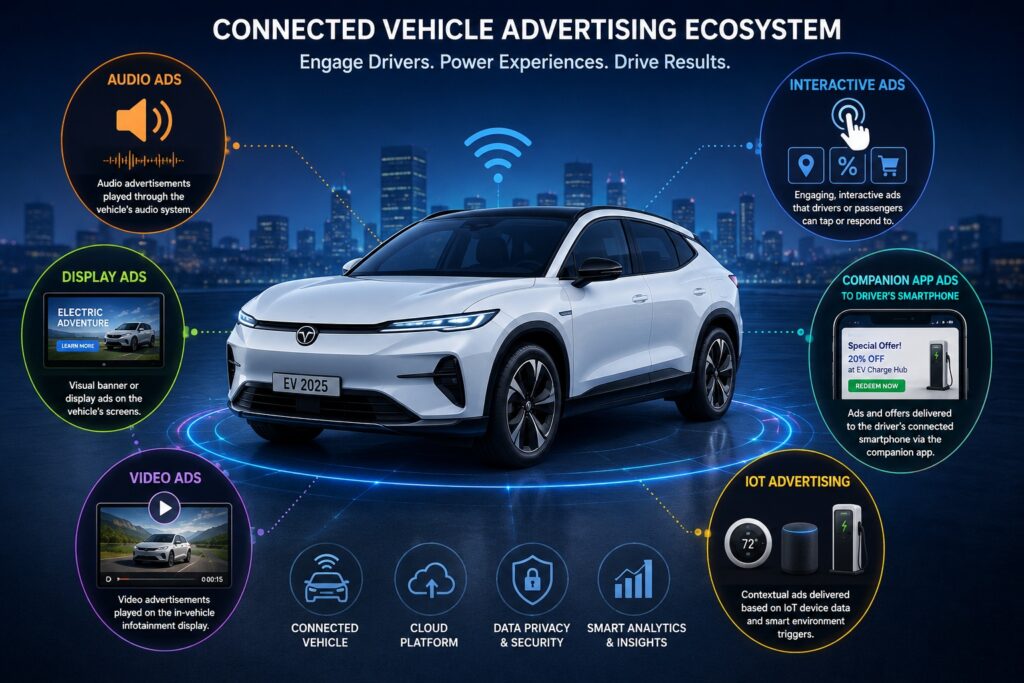
The automotive industry is rapidly evolving into a new digital media ecosystem where connected vehicles function as intelligent advertising platforms capable of delivering personalized, location-aware, and interactive media experiences. Modern vehicles now include high-speed connectivity, cloud-based infotainment systems, AI-driven personalization engines, digital dashboards, passenger displays, voice assistants, and connected mobile applications that enable entirely new forms of advertising and customer engagement.
In-vehicle advertising is becoming increasingly attractive to automakers, advertisers, streaming providers, retailers, and mobility companies because vehicles represent one of the few remaining highly engaged digital environments. Drivers and passengers spend significant amounts of time inside vehicles, creating opportunities for targeted media delivery, commerce, entertainment, and branded experiences. Unlike traditional advertising platforms, connected vehicles can combine real-time location data, user profiles, trip context, environmental conditions, and vehicle telemetry to deliver highly personalized advertising experiences.
Connected vehicle advertising ecosystems include audio advertising, display advertising, streaming video, interactive engagement systems, IoT-enhanced experiences, and companion application advertising. These systems can monitor engagement, measure interactions, and allow users to respond directly through touchscreens, voice assistants, gestures, navigation systems, or connected devices.
The In-Vehicle Advertising Ecosystem
The connected vehicle advertising ecosystem combines media delivery, targeting, analytics, and interaction technologies into a unified platform. Advertising can appear through infotainment screens, passenger displays, rear-seat entertainment systems, connected apps, voice assistants, ambient lighting systems, and other connected devices inside and outside the vehicle.
Modern advertising platforms inside vehicles support multiple advertising formats including audio ads, display banners, streaming video advertisements, native user interface placements, sponsored charging services, navigation promotions, and branded commerce integrations. Unlike traditional automotive media, connected vehicles allow dynamic ad targeting using location, driver behavior, user profiles, trip destinations, weather conditions, charging activity, and real-time vehicle status information.
Advertising engagement can also be measured in ways that were previously impossible in traditional automotive media environments. Connected vehicle systems can track impressions, viewing duration, interactions, navigation requests, voice responses, purchases, and other contextual engagement indicators to optimize campaign effectiveness and monetization opportunities.
Audio Advertising
Connected Car Audio Advertising
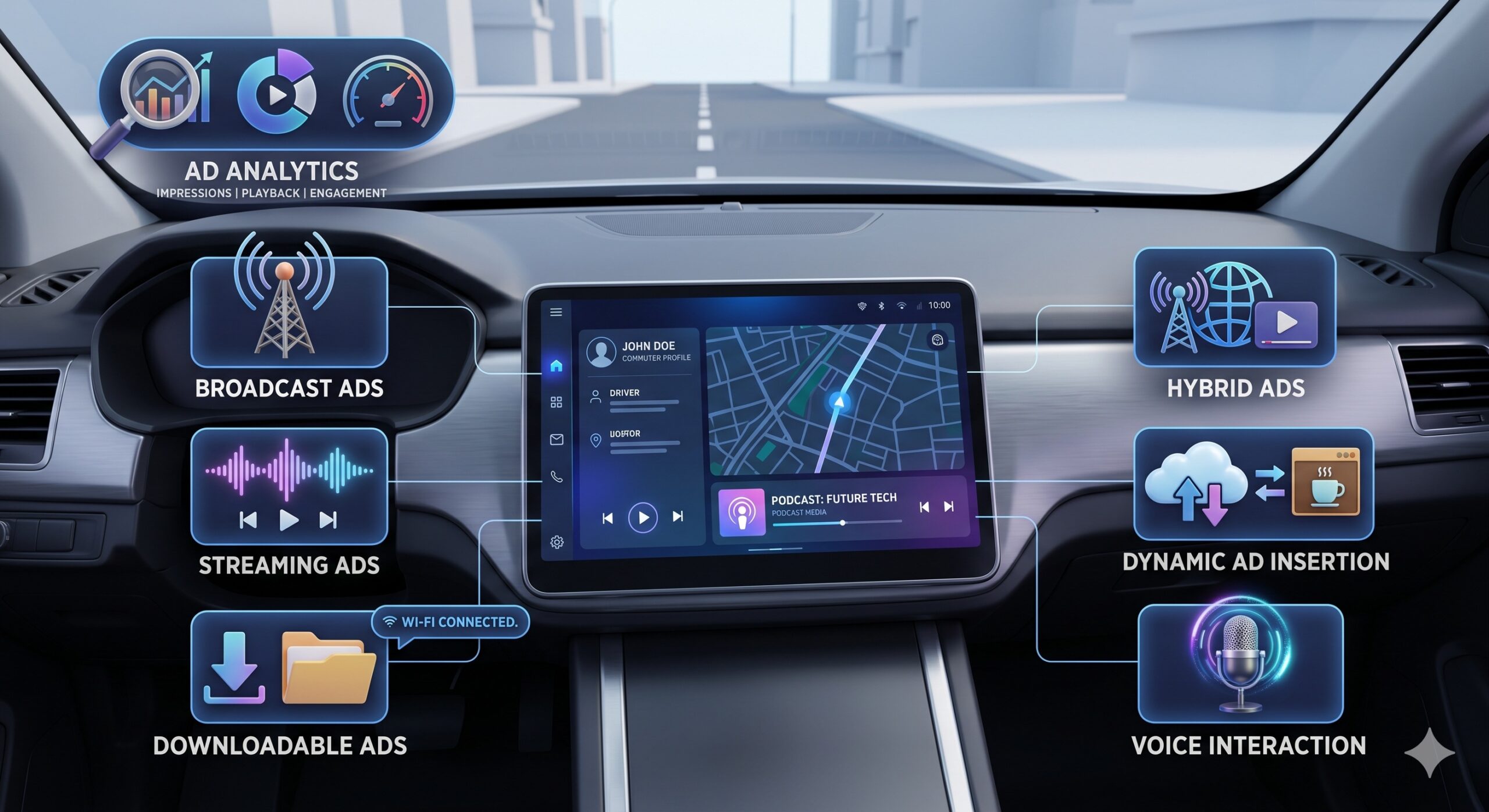
Connected vehicle audio advertising combines broadcast radio, streaming media, downloadable content, and cloud-based infotainment systems to deliver personalized audio advertisements directly to drivers and passengers. Vehicles now support hybrid media ecosystems where AM/FM radio, internet streaming, podcasts, OTT audio platforms, and downloadable sponsored media coexist within a unified listening environment.
Dynamic Ad Insertion (DAI) systems allow cloud platforms to replace or personalize advertisements in real time based on audience profiles, location, trip context, media preferences, and vehicle conditions. Vehicles can also pre-download audio advertisements and sponsored media during charging sessions or Wi-Fi connections to reduce bandwidth usage and improve playback reliability in low-connectivity environments.
Voice interaction adds another layer of engagement by allowing users to respond directly to advertisements through voice assistants. Drivers may request coupons, restaurant reservations, navigation directions, or commerce actions using hands-free conversational interfaces. At the same time, connected vehicle analytics systems can monitor playback completion rates, interaction levels, and engagement behavior to improve advertising performance and monetization models.
Display Advertising
Connected Car Display Advertising
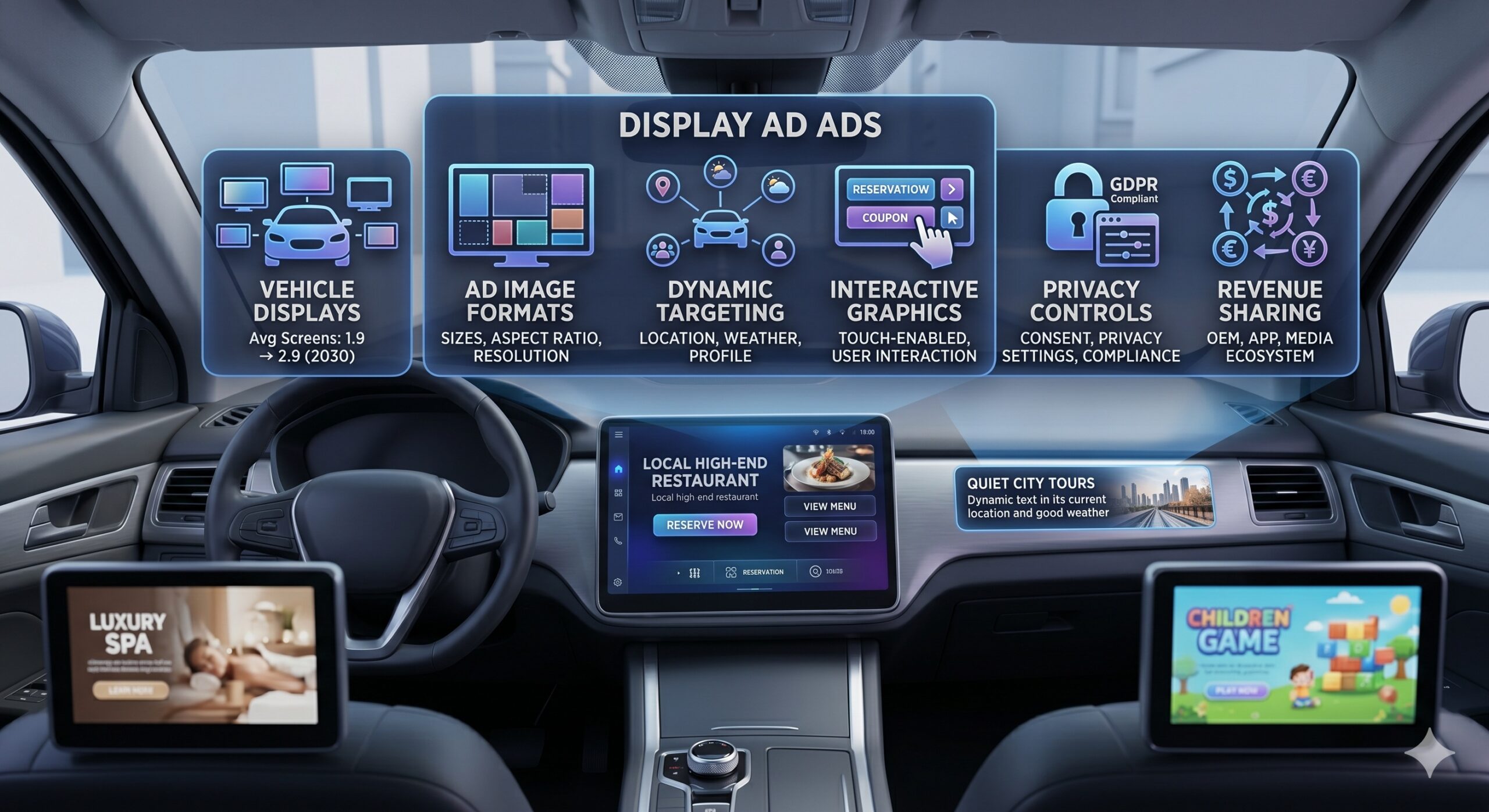
Connected vehicle display advertising uses infotainment consoles, passenger screens, rear-seat displays, digital dashboards, and companion interfaces to present graphical advertisements, sponsored services, and contextual information inside vehicles. The number of displays inside vehicles is rapidly increasing, with industry forecasts showing the average number of displays growing from approximately 1.9 displays per vehicle today to nearly 2.9 displays per vehicle by 2030.
Display advertising systems support multiple image formats, aspect ratios, resolutions, and compression methods optimized for automotive environments. These advertisements can dynamically adapt based on weather conditions, route destinations, vehicle status, passenger profiles, and location information.
Interactive graphics further increase engagement opportunities by allowing users to interact directly with advertisements using touch-enabled displays. Drivers and passengers can access coupons, make purchases, request navigation assistance, reserve services, or interact with branded content directly from vehicle interfaces. However, these systems must also incorporate strong privacy controls, consent management systems, and regulatory compliance frameworks to protect consumer trust and reduce cybersecurity risks.
Video Advertising
Connected Car Video Advertising
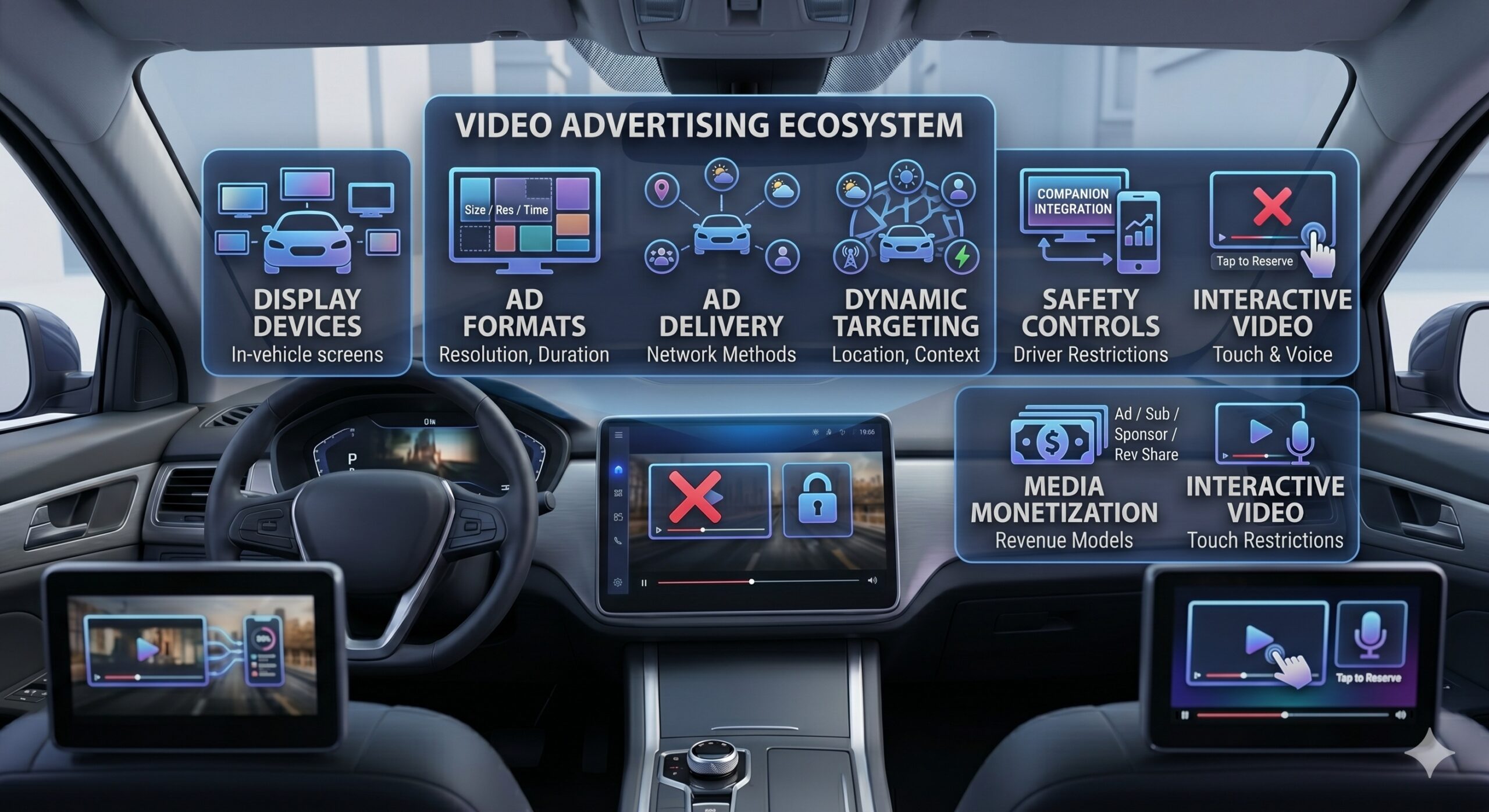
Connected vehicle video advertising is creating entirely new opportunities for OTT streaming providers, media companies, advertisers, and OEMs. Modern infotainment systems, passenger displays, and rear-seat entertainment systems can now support high-quality video streaming and targeted video advertisements delivered through cloud-connected platforms.
Video advertising formats vary widely in size, resolution, play length, and delivery method. Because streaming video consumes significant bandwidth, connected vehicles increasingly rely on intelligent delivery systems that optimize media quality based on available connectivity, charging status, and viewing conditions. Dynamic targeting systems can personalize video advertisements using vehicle location, weather, user profiles, viewing behavior, and trip context.
Connected vehicle video platforms also support companion device integration, enabling campaigns to synchronize between vehicle displays and mobile applications for retargeting and continued engagement outside the vehicle. Interactive video experiences can include QR codes, voice responses, coupons, reservations, and commerce integrations. Safety controls remain critical because driver-facing video playback must comply with distraction management policies and automotive safety regulations.
Interactive Advertising
Connected Car Interactive Advertising
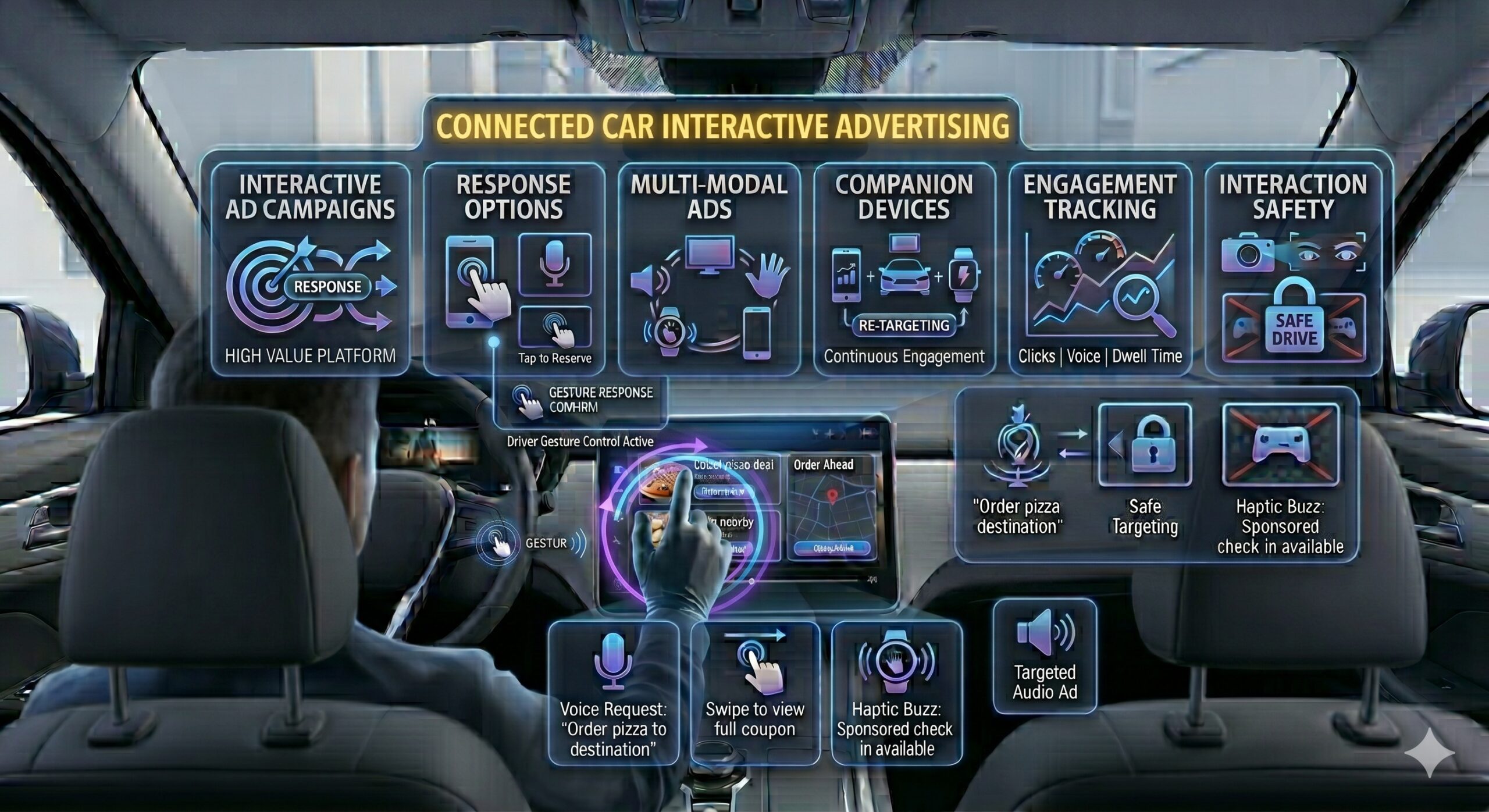
Interactive advertising is one of the most valuable and transformative capabilities enabled by connected vehicles. Unlike traditional passive advertising, interactive campaigns allow drivers and passengers to directly engage with advertisements using touchscreens, voice assistants, gesture controls, haptic systems, and connected devices.
Interactive campaigns can combine multiple forms of media into unified advertising experiences that include audio prompts, display graphics, haptic feedback, and voice interactions. Responses may include touch selections, verbal commands, hand gestures, navigation requests, service activations, purchases, and other forms of engagement. Companion devices such as smartphones and smartwatches can also extend campaign interactions outside the vehicle environment.
These systems provide significantly higher advertising value because OEMs and advertisers can track interactions including clicks, dwell time, voice responses, navigation activations, conversions, and engagement behavior. However, interactive advertising systems must carefully minimize driver distraction using context-aware controls, driver-state monitoring systems, and intelligent interface restrictions.
IoT Advertising
Connected Car IoT Advertising
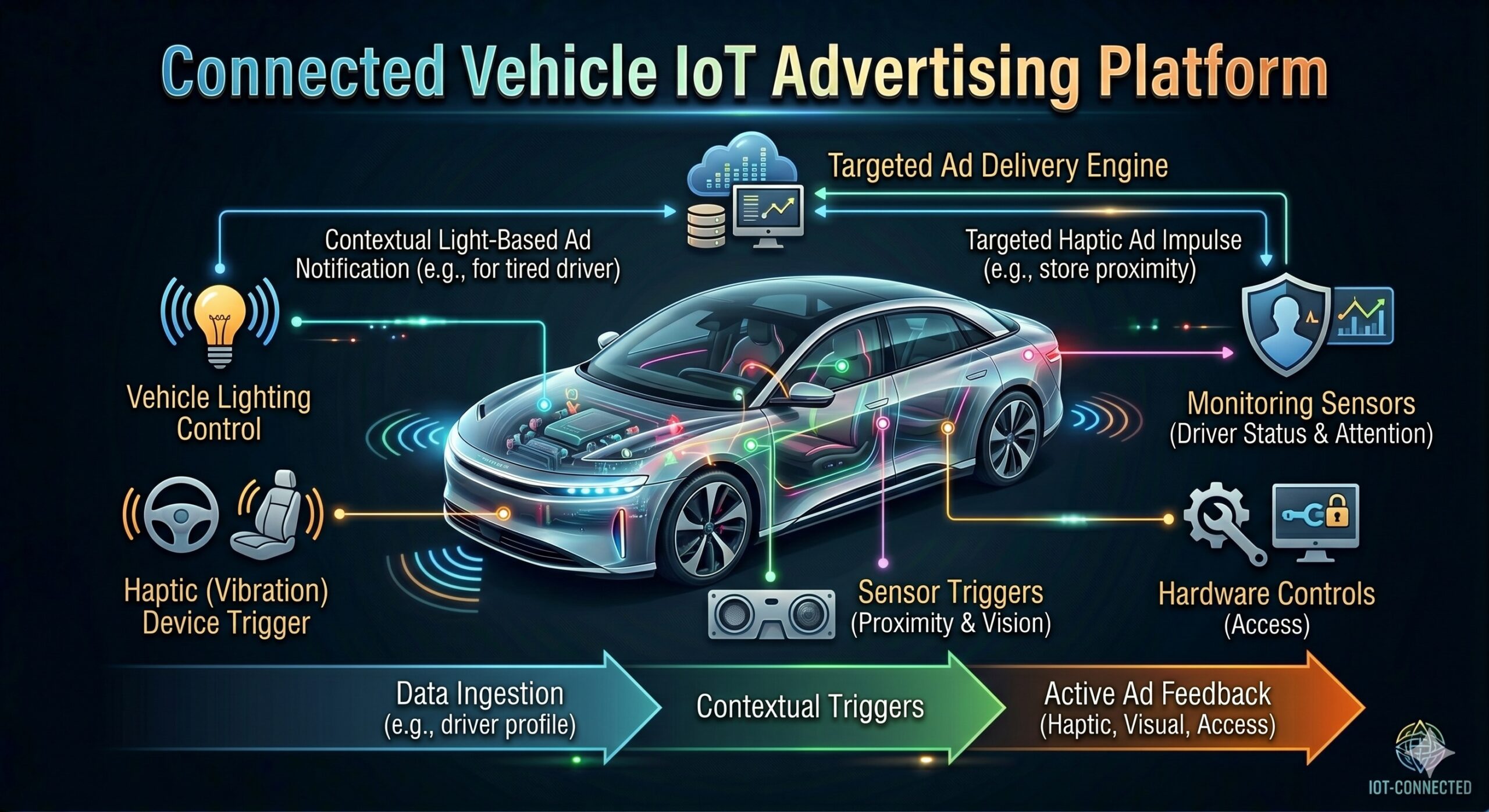
Connected vehicle IoT advertising expands media experiences beyond traditional screens and speakers by using sensors, lighting systems, haptics, smart surfaces, and mechanical feedback systems to create immersive and contextual advertising experiences.
Vehicle ambient lighting, dashboard indicators, flashing controls, and exterior lighting systems can reinforce advertising messages or branded experiences. Steering wheel vibrations, seat haptics, and tactile controls can provide confirmation feedback or subtle interaction cues. Vehicle sensors that monitor occupancy, movement, location, and environmental conditions can dynamically trigger advertising experiences based on real-world context.
Gesture recognition systems also enable touchless interactions where occupants respond to advertisements through hand motions or cabin monitoring systems. Advanced analytics platforms can monitor engagement through sensor activity, control activations, dwell time, and even occupant emotion indicators derived from cabin video analytics. As with all in-vehicle advertising technologies, IoT-based advertising systems must prioritize driver safety and minimize distraction risks.
Companion App Advertising
Connected Car Companion App Advertising
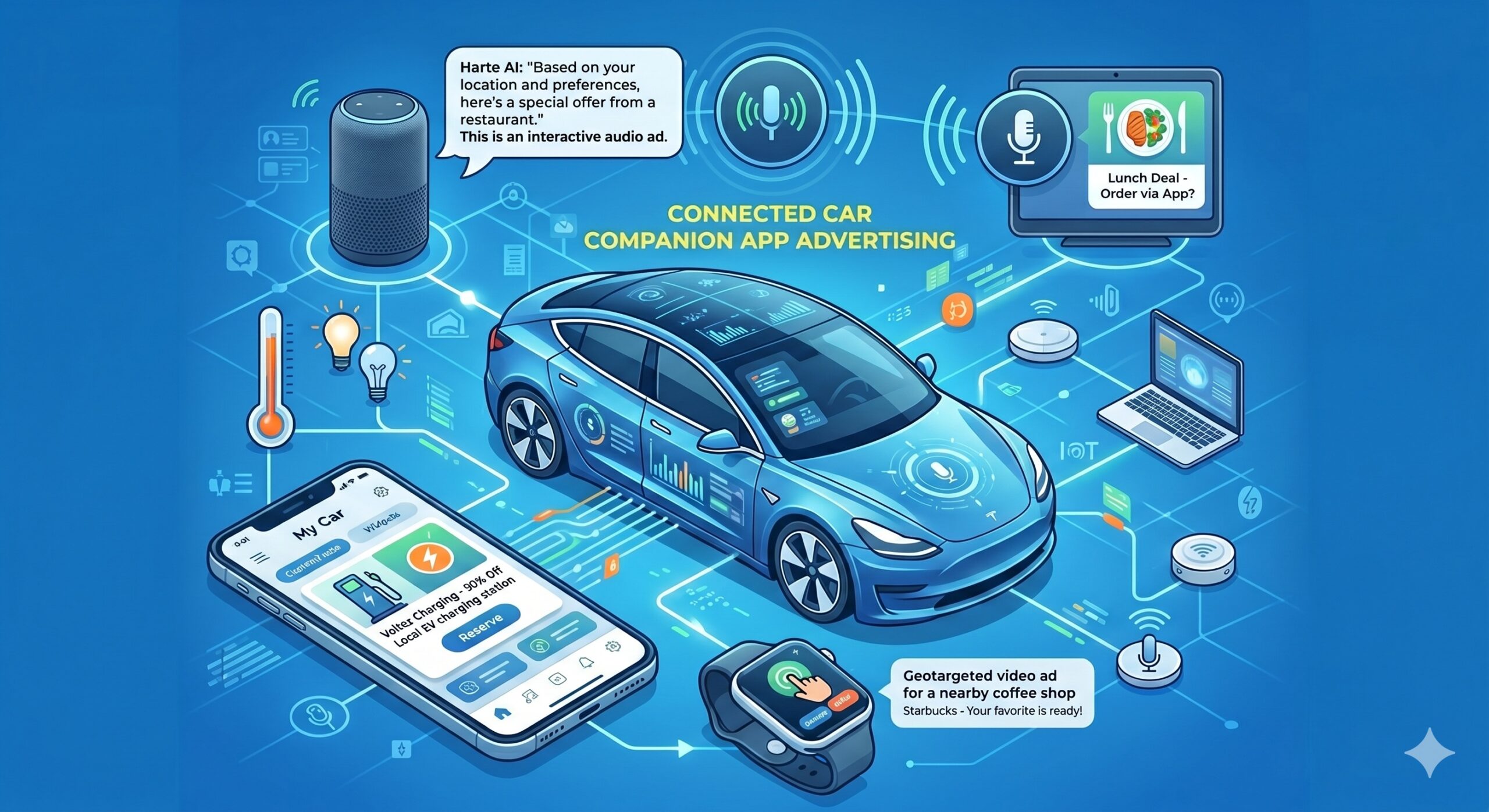
Companion app advertising extends connected vehicle engagement beyond the vehicle itself by integrating smartphones, smartwatches, voice assistants, and connected personal devices into the advertising ecosystem. Connected vehicle mobile applications can deliver personalized promotions, sponsored services, notifications, and location-aware advertising directly to users through apps linked to vehicle platforms.
Voice assistant advertising platforms such as Alexa and Google Assistant enable conversational advertising experiences and hands-free engagement. Smartwatch integrations allow advertisers to extend campaigns through notifications, loyalty programs, reminders, and personalized offers. Cross-device synchronization further enhances campaign effectiveness by coordinating advertising experiences between the vehicle, mobile devices, wearables, and smart home ecosystems.
Companion advertising platforms also provide advanced engagement analytics by measuring clicks, app sessions, purchases, navigation requests, voice interactions, and conversions across multiple devices. Because these systems operate across highly personal ecosystems, strong privacy controls, consent management, and secure data handling policies are essential to maintaining customer trust.
The Future of In-Vehicle Advertising
Connected vehicles are evolving into intelligent digital media platforms that combine connectivity, personalization, analytics, commerce, and immersive interaction technologies. As infotainment systems become more sophisticated and vehicles gain additional displays, sensors, AI capabilities, and cloud connectivity, in-vehicle advertising will continue to expand across audio, video, display, IoT, and cross-device ecosystems.
For automakers, connected vehicle advertising creates entirely new recurring revenue opportunities that extend throughout the life of the vehicle. For advertisers and media companies, vehicles represent a new premium engagement environment capable of delivering highly targeted and measurable campaigns. The companies that successfully balance personalization, monetization, privacy, safety, and user experience will help define the future of connected vehicle media services.

About Lawrence Harte
Lawrence Harte is the publisher and senior editor of EV Business Magazine and the Director of Automotive Media and Digital Services at the Connected Vehicle Trade Association – CVTA. He has authored more than 153 books – mostly on communications, media, automotive and business. Between 2005 and 2026, he interviewed more than 4,137 executives and technologists in the communication, media and automotive industries. He is the author of Connected EVs Explained, EV Charging Systems for Apartments and Connected Vehicle Services Business books. Mr. Harte has worked for Ericsson/General Electric, Audiovox/Toshiba and has been an expert consultant for Samsung, Google TV , Nokia, and dozens of other top media and technology companies. At Ericsson GE, he was responsible for the development of mobile phone radio modules and worked with Ford, Delphi and other companies to help integrate cellular modems – telematics – into vehicles and systems. He holds many degrees and certificates including an Executive MBA from Wake Forest University, and a BSET from the University of the State of New York.